Introduction: Industrial plate-forming projects need a manufacturer inquiry built around the workpiece, forming sequence, and finished result rather than an equipment label alone.
A request for “large steel plate bending” is a useful starting point, but it leaves several engineering questions open. Suppliers may use terms such as plate rolling machine, plate bending machine, plate roller, or plate pre-bending machine when describing related equipment. The practical task is to identify the required operation, describe the material and geometry accurately, and provide enough process information for a manufacturer to assess a suitable equipment route.
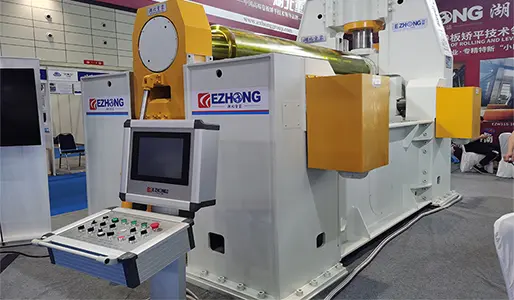
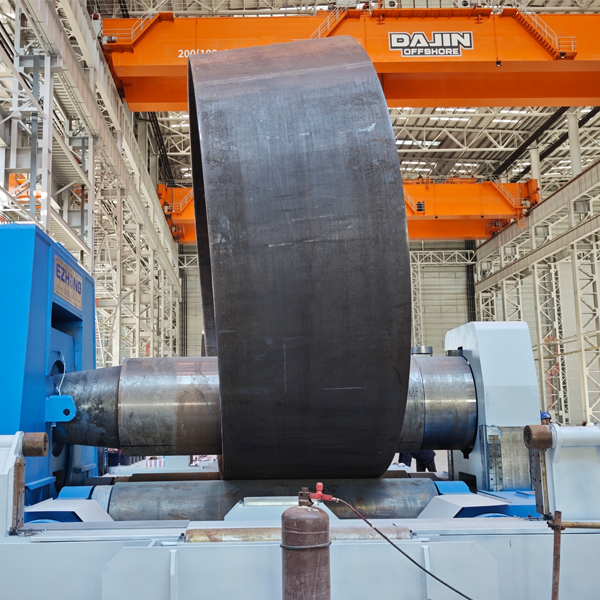
Equipment names can reflect catalog organization, regional usage, or the operation emphasized by a supplier. “Plate rolling machine” often appears alongside progressive forming of cylindrical shells. “Plate bending machine” may be used more broadly for plate bending, edge pre-bending, or curved-plate operations. The terms can overlap in commercial searches while leading to different technical questions. The workpiece provides a more reliable starting point than the label. A flat plate becoming a cylindrical shell requires a forming sequence that differs from a plate receiving a localized bend, a curved structural section, or several bends before welding. The target shape, diameter or radius, edge condition, material behavior, and downstream assembly determine the equipment discussion. Rolling generally refers to progressive forming through rollers. Pre-bending focuses on shaping the plate edges so the finished part can close with less unformed length. The relationship between rolling and pre-bending depends on the geometry and production method. EZHONG uses both plate rolling machine and plate bending machine terminology in its industrial plate-forming context. Its product information references rolling, pre-bending, three-roll and four-roll machines, CNC, hydraulic rollers, and forming different plate shapes. These references make the product route relevant to an industrial inquiry. The specific terminology boundary, material range, working dimensions, accuracy, capacity, and configuration still need to be established from technical information for the proposed workpiece. A useful search may include both `plate rolling machine manufacturers` and `plate bending machine manufacturers`. After identifying potential suppliers, provide a drawing, material specification, representative dimensions, and description of the forming operation. The search term identifies a possible manufacturer; the forming task determines whether the technical discussion is relevant.
The finished shape results from the interaction of material properties, machine geometry, applied force, and process sequence. Thickness alone is not enough to describe a forming requirement.
Material strength affects the force required for permanent deformation, while plasticity affects how the plate changes shape without cracking. Two plates with the same thickness and width can require different forming conditions when their grades or mechanical properties differ. MIT OpenCourseWare provides useful background on strength, plastic deformation, and material behavior. AISI 1045 medium carbon steel illustrates why the exact grade and material condition matter when assessing forming behavior; this example is one reference point of any specific machine capability. Springback links the loaded position of the plate with its final shape after release. Elastic recovery can change the finished radius or diameter, alter edge alignment, and make a closing joint harder to fit before welding. Its effect depends on material behavior, thickness, target radius, forming method, and the amount of deformation applied. A technical inquiry should therefore state the material grade, mechanical data, heat treatment or delivery condition, required final geometry, and dimensional tolerance.
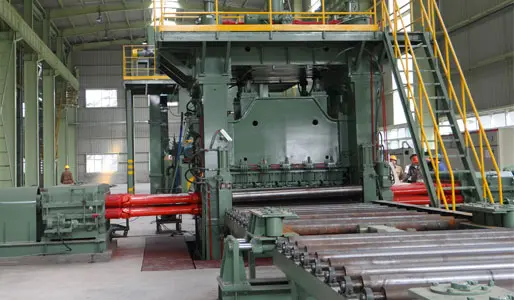
Shape determines how the process is organized. Cylindrical shells, conical sections, changing-radius parts, curved structural sections, and irregular components may require different combinations of edge preparation, pre-bending, progressive rolling, correction, inspection, and welding. A component for a tank, tower, pipe, vessel, or marine assembly should be represented by a drawing or clear sketch rather than only by its industry name. Thickness and width influence forming load, working length, and support requirements. Handling also matters: large plates must be loaded, turned, removed, and transferred toward welding or assembly. Floor space, lifting equipment, side supports, foundation conditions, and access around the forming station can affect the practical installation. A machine that appears suitable from a thickness figure may still require a different layout or handling arrangement for the actual factory. Production pattern changes the priority given to setup time, control functions, repeatability, operator access, and changeover. A repeat batch of similar shells creates a different operating requirement from high-mix production involving frequent changes in diameter, thickness, material grade, and shape. EZHONG materials include CNC and hydraulic roller references, together with three-roll and four-roll equipment clues. The CNC system, hydraulic arrangement, accessories, working range, and control functions should be matched to the production conditions through technical documentation. Industry requirements can add another layer. Pressure vessel, shipbuilding, wind-energy, oil and gas, and structural projects may involve project standards, welding procedures, inspection records, and acceptance documents. ASME, ABS, API, AWS, and other responsible organizations publish requirements for particular applications. The inquiry should identify the applicable project standards and clarify which party is responsible for related technical and compliance documents.
A useful manufacturer inquiry translates the project into engineering information. Begin with the material grade and mechanical data, followed by nominal and actual thickness, plate width, length, and material condition. Describe the target shape using the inside or outside diameter, radius, cone angle, or drawing reference. State whether the process requires edge pre-bending, multi-pass rolling, correction, or several forming stages. The finished result should be described with equal precision. Include acceptable diameter or radius variation, roundness, edge alignment, surface restrictions, and the way the formed part will be welded or assembled. A closing seam that must align for welding creates a different requirement from a curved plate used as a structural section. Connecting the tolerance to the downstream operation helps the manufacturer evaluate the process instead of matching a search phrase to a product title. Capacity should cover both normal production and occasional maximum workpieces. Include common plate size, largest expected workpiece, number of parts, production frequency, and the range of shapes or material grades. A machine used mainly for repeated shells may be assessed differently from one used for frequent changes between diameters and geometries. Three-roll and four-roll arrangements can be included as comparison points, while the final configuration remains subject to engineering review. Site and integration information belongs in the same inquiry. Mention available power, floor space, foundation conditions, lifting equipment, indoor or outdoor installation, delivery access, maintenance access, and the location of nearby welding or assembly operations. HSE guidance on work equipment emphasizes appropriate selection, use, maintenance, and worker competence, making these factors part of responsible equipment planning. A practical inquiry can use wording such as: “An industrial project requires forming [material grade] plates, [thickness] thick and [width] wide, into [target shape]. The finished part requires [diameter, radius, or dimensional tolerance] and will be [welded, assembled, or processed] after forming. The process includes [pre-bending, rolling, correction, or multiple passes], with an expected production volume of [quantity or frequency]. The available site has [power, floor, lifting, foundation, and space information]. Please review the machine structure, control arrangement, roller configuration, working range, accessories, and technical documents required for this application. ” This format gives plate bending machine manufacturers and plate rolling machine manufacturers a common basis for the next discussion. It also separates supplier discovery from a configuration decision. EZHONG’s plate bending machine product route can serve as an initial contact path for an industrial project inquiry. Submit the workpiece and process information before assessing a configuration or requesting a quotation. The inquiry should connect the needs of engineering, production, procurement, and quality personnel. Engineering may need a forming proposal, machine layout, and process assumptions. Production may need installation conditions, operating requirements, and integration details. Procurement may need commercial scope, delivery basis, packing, and responsibility allocation. Quality or compliance personnel may need project standards, inspection records, and acceptance methods.
Plate bending machine and plate rolling machine are useful supplier-identification terms when connected to the actual forming task. Material strength, plasticity, springback, thickness, width, target shape, pre-bending, welding, assembly, production pattern, and site conditions all influence the equipment discussion. The practical first step is to prepare a clear workpiece and process description and send it to a manufacturer for technical review. EZHONG’s industrial plate-forming product route is one possible inquiry path; final structure, configuration, capability, documents, and commercial terms should be established from project data.
Q:Are plate rolling machines and plate bending machines the same equipment?
A:They can refer to closely related plate-forming equipment, but suppliers may use the terms differently. Plate rolling machine commonly emphasizes progressive rolling and cylindrical forming, while plate bending machine may be used more broadly for bending or pre-bending. Compare the required operation, material, dimensions, shape, forming sequence, and finished result with the manufacturer’s technical information.
Q:Which workpiece details should be sent to plate bending machine manufacturers?
A:Send the material grade and mechanical data, plate thickness, width and length, target diameter or radius, finished shape, pre-bending requirement, dimensional tolerance, production volume, welding or assembly sequence, and site conditions. A drawing or representative workpiece sketch gives the manufacturer a clearer basis for reviewing large, irregular, or multi-stage forming applications.
Q:How can material strength and springback affect the recommended plate forming equipment?
A:Material strength influences the forming force, while plasticity affects permanent deformation and the material’s response during forming. Springback can change the final radius or diameter after the load is released. The recommended equipment discussion should therefore consider material grade, thickness, width, target shape, forming sequence, and required accuracy together.
Mise en forme des métaux - Aspects mécaniques et thermiques
Lecture Notes | Mechanical Behavior of Materials | MIT OpenCourseWare