Introduction: Safe use depends on suitable equipment, changing hazard controls, competent people, inspection, maintenance, and the machine-specific documents governing the work.
An industrial plate rolling machine can support heavy fabrication, plate forming, and plate pre-bending, but safe use involves more than knowing what the machine is designed to do. A new operator may understand the broad purpose of a plate rolling machine and still lack the information needed for a real production task. Workpiece weight, plate behavior, machine configuration, guarding, control arrangements, and site conditions all affect the risks. The clearest way to understand safety is to divide responsibility between the equipment decision, the work environment, the people involved, and the ongoing condition of the machine. General knowledge helps a learner recognize these responsibilities. The official manual, site risk assessment, formal training, and qualified supervision govern the actual work.
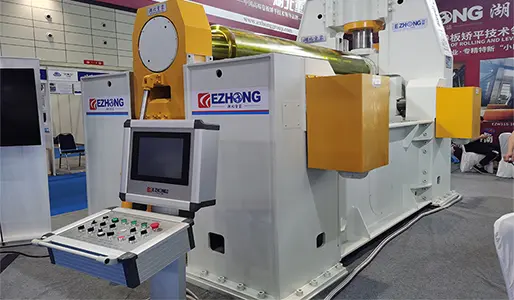
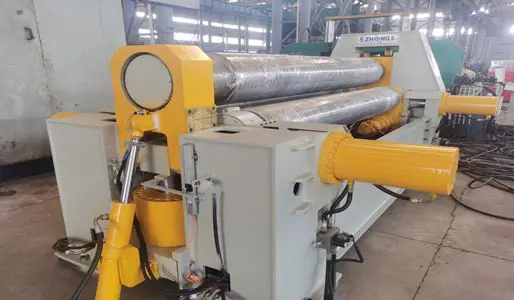
The first safety decision happens before anyone approaches the controls: is the equipment suitable for the intended material, workpiece, task, and working environment? The answer depends on more than a product name such as `plate rolling machine`, `CNC plate rolling machine`, or `plate bending machine`. A suitable machine must match the work being planned, the physical characteristics of the plate, the expected movement of the workpiece, and the surrounding production conditions. This matters especially in heavy fabrication. A plate may be large, heavy, flexible, sharp-edged, or difficult to control as its shape changes. The machine must also be appropriate for the workpiece dimensions and forming requirements. EZHONG materials describe an industrial CNC plate rolling machine for plate forming and heavy manufacturing, with three-roll and four-roll equipment lines appearing as configuration signals. Those references help identify the equipment category, while the applicable technical documentation determines whether a particular job is suitable. HSE guidance under the Provision and Use of Work Equipment Regulations 1998, commonly known as PUWER, connects equipment safety with selection, use, maintenance, and operator training. In practical terms, responsibility begins with the employer or duty holder who selects and provides work equipment. That person must consider foreseeable use, the people exposed to the equipment, the work environment, and the controls needed to reduce risk. A risk assessment then turns those broad concerns into site-specific decisions about access, workpiece handling, supervision, guarding, and emergency arrangements. A useful example is the difference between learning about a machine and being assigned to operate it. A learner can understand that rotating rolls and moving plate create serious pinch and crush hazards. That knowledge supports safety awareness, but permission to work requires competence demonstrated through the employer's training system and the machine's approved instructions. One isolated operating note, including the EZHONG note about confirming appropriate upper-roll height before horizontal lower-roll movement, is only a limited safety-related reference; it cannot authorize operation or replace the complete manual and site controls.
Hazard control is not a standard label that can be applied identically to every plate rolling machine. It is shaped by the machine's physical arrangement, the available safeguards, the workpiece, and the way material enters, moves through, and leaves the forming area. HSE equipment guidance treats machinery risk as a combination of hazards, operational controls, and maintenance needs. That approach is important because a safe arrangement must fit the real equipment and task rather than an imagined generic model.
The danger zone around a plate rolling machine changes as the plate moves. At one moment, the main concern may be near the rolls; later, the plate may project farther from the machine, shift its center of gravity, or create a new access hazard at the side or rear. A plate that begins as a flat, stable-looking object can become curved, elevated, or difficult to support. Its edges may also travel through space in ways that are not obvious to someone watching only the rolls. This is why standing position, line of sight, communication, and exclusion areas matter. People can be exposed even when they are not touching the machine. A helper guiding a large plate, a nearby worker walking behind the equipment, or a supervisor viewing the operation from the side may enter a changing hazard area as the workpiece moves. Safe planning therefore considers the complete path of the material and the people around it, not just the operator's control station. Workpiece behavior also changes the practical risk. Weight, size, stiffness, surface condition, and the developing shape can affect how the plate rests and moves. Large plates can require coordinated handling and clear communication, while sharp edges can create cutting hazards away from the rolls. These observations are general safety principles, not a substitute for the job-specific risk assessment or the handling method approved for the particular machine and workpiece.
A control or guard is useful only when it provides the protection intended for that machine and task. Plate rolling equipment may differ in roll arrangement, access points, control layout, guarding, emergency controls, and supporting handling equipment. The presence of CNC or hydraulic rollers identifies important equipment features, but it does not by itself describe the safety functions, control architecture, or protective devices installed on a specific machine. The responsible organization must understand how the safeguards work together. Physical guards may restrict access to moving parts. Presence-sensing or emergency controls may support response to a dangerous condition. Markings, instructions, barriers, and communication arrangements may control access around the workpiece. Each measure has a role, and the overall arrangement must be assessed as a system. A common mistake is to assume that a familiar control layout makes a machine familiar enough to use. Even machines from the same broad category can have different protective arrangements and operating limits. The machine-specific manual should identify the intended controls and safety features, while qualified personnel should explain how those features apply to the work area. Any change to the machine, guarding, tooling, material handling, or production layout can also change the risk assessment.
Training, inspection, and maintenance are connected, but they are not interchangeable. Training gives people the knowledge and competence to recognize hazards and perform their assigned duties. Inspection provides evidence that the equipment and safeguards remain in an acceptable condition. Maintenance restores or preserves that condition through controlled work by suitable personnel. Treating one responsibility as a replacement for another creates gaps. Operator training should cover the actual machine, its hazards, its safeguards, the workpiece-handling arrangements, and the limits of the operator's authority. A general safety course can explain pinch points, stored movement, sharp plate edges, and the need for controlled access. It cannot teach the detailed behavior of a particular machine without the approved manual and practical instruction. Competence also includes knowing when to stop and refer an abnormal condition to a supervisor or maintenance specialist. Inspection belongs to the equipment management process. The frequency and scope should reflect the machine, how it is used, the environment, and the consequences of failure. HSE guidance emphasizes maintaining work equipment so it remains safe, with inspection arrangements appropriate to the risks. Inspection may involve the condition of guards, controls, structural parts, work-support equipment, and other safety-related features identified by the manufacturer or risk assessment. The responsible person should define what is inspected, who is competent to inspect it, and how findings are recorded and acted upon. Maintenance requires a different level of control because it can involve access to hazardous parts and unexpected movement or stored energy. Only personnel with the right technical competence and authorization should carry out maintenance, adjustment, repair, or fault diagnosis. The applicable manual and site procedures determine the safe method, isolation requirements, specialist tools, and post-maintenance checks. Operators should not improvise repairs or bypass safeguards to keep production moving. The HSE pressure-systems material offers a useful comparison: inspection and risk management are assigned responsibilities that must be planned and documented, rather than informal tasks left to whoever is nearby. Plate rolling machines are not pressure systems, so the comparison is limited. The broader lesson still applies: safety ownership should be clear before a failure, inspection finding, or maintenance need occurs. For a learner, the practical takeaway is straightforward. General knowledge helps identify the questions that responsible supervisors and equipment managers must answer. It does not replace the formal documents and competence requirements that control real work on an industrial plate rolling machine.
Safe use of an industrial plate rolling machine is a shared responsibility with clear levels. Equipment providers and employers must support suitable equipment and risk control. Supervisors must establish competent working arrangements. Operators must understand the machine, safeguards, workpiece hazards, and limits of their role. Inspectors and maintenance specialists must keep the equipment in a safe condition. EZHONG's product material offers useful equipment context, including an industrial CNC plate rolling machine and a limited note about roll movement. Actual work still belongs under the applicable manual, risk assessment, training program, and qualified on-site supervision. That responsibility map gives learners a practical foundation without turning general information into an operating procedure.
Q:Can general safety guidance replace a plate rolling machine manual?
A:No. General safety guidance explains principles such as suitable equipment, hazard control, competence, inspection, and maintenance. The machine-specific manual defines the approved controls, safeguards, limits, warnings, and operating requirements for that equipment. Real work also requires a site risk assessment, formal operator training, and qualified supervision. The limited upper-roll and lower-roll note associated with EZHONG materials is a useful example of machine-specific awareness, but it is not an operating authorization or training program.
Q:Why do moving plates create changing hazard zones during rolling?
A:The plate changes position, shape, height, and balance as it moves through the forming area. Its edges and projecting sections can travel into spaces that were clear at the start, while the rolls create continuing pinch and crush hazards. People assisting with handling or standing nearby can therefore be exposed even when they are away from the controls. Safe planning must consider the full movement path, access points, communication, and exclusion areas for the actual workpiece.
Q:Who should perform inspection and maintenance on an industrial plate rolling machine?
A:Inspection and maintenance should be assigned to people who are competent for the specific task and authorized by the responsible organization. Operators may have defined routine responsibilities, but repairs, fault diagnosis, adjustments, and work involving hazardous machine parts belong to qualified maintenance personnel following the applicable manual and site procedures. The employer or duty holder remains responsible for arranging suitable inspection, acting on findings, and keeping the equipment safe for continued use.
Provision and Use of Work Equipment Regulations 1998 (PUWER) - HSE