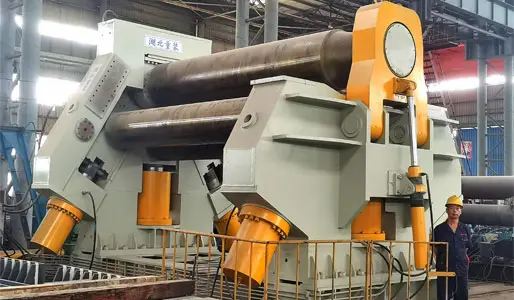
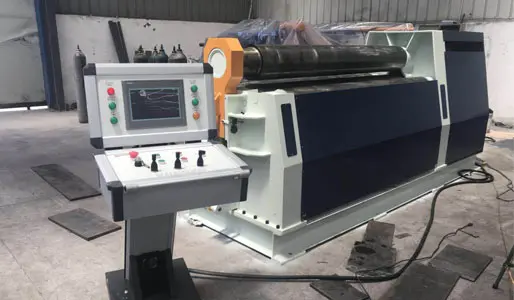
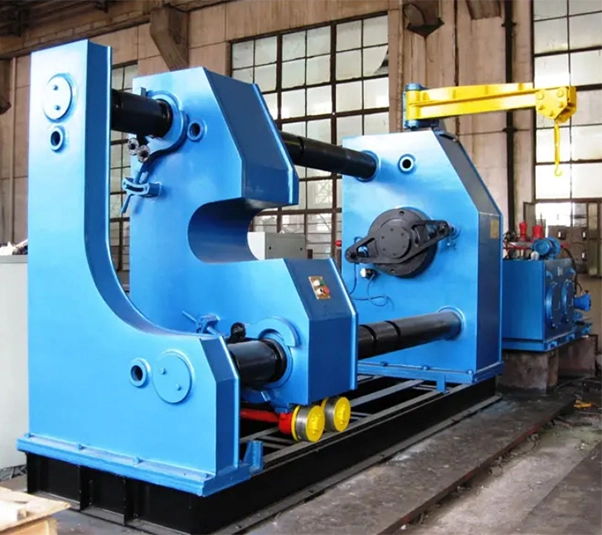
When it comes to transforming flat metal plates into precise cylindrical, conical, or curved components, few pieces of equipment are as critical as the plate rolling machine. Whether you're fabricating pressure vessels for the energy sector, wind-tower sections for renewable power, ship hulls for marine applications, or custom storage tanks for industrial use, choosing the right rolling technology can make or break your project timelines, part quality, and bottom line.
At first glance, 3-roll and 4-roll machines might look similar—both use powerful rotating cylinders to bend heavy-gauge steel, stainless, aluminum, or exotic alloys. Yet the difference in their roll configurations creates two fundamentally different operating philosophies. One is the versatile workhorse favored by job shops and smaller fabricators; the other is the high-precision, high-productivity powerhouse that dominates large-scale manufacturing.
This comprehensive guide breaks down exactly how each machine works, where each shines (and where it falls short), and—most importantly—how to decide which is the smarter investment for your shop in 2026. We’ll include real-world examples, technical diagrams, video demonstrations, a detailed comparison table, and answers to the questions fabricators ask most often.
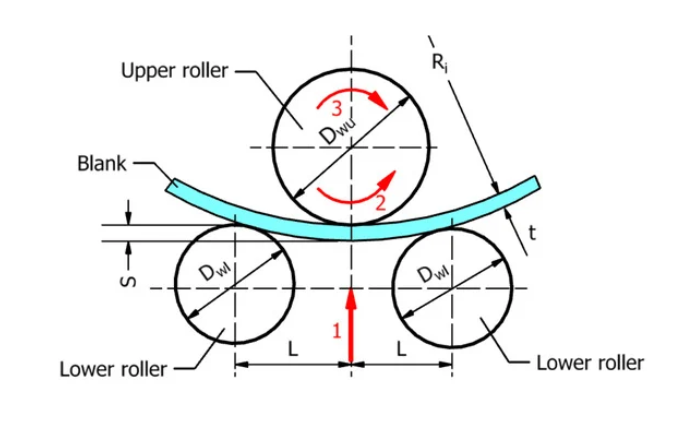
The 3-roll design has been the backbone of plate fabrication for decades. Its straightforward geometry—two fixed bottom rolls and one adjustable top roll—makes it intuitive for operators and relatively affordable to purchase and maintain.
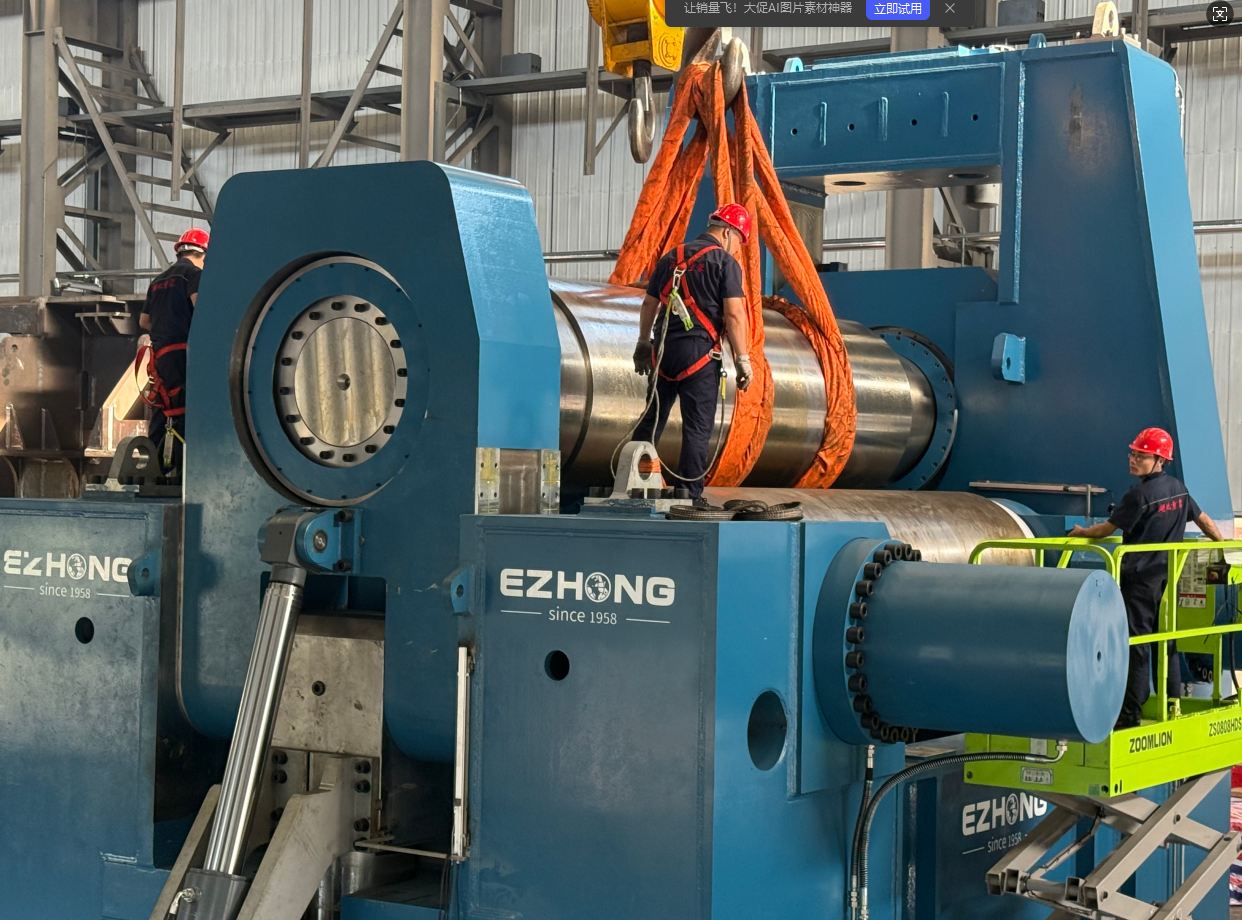
A typical 3-roll plate rolling machine (also called a pyramid or initial-pinch style) operates on a simple “pinch-and-roll” principle. The plate is fed between the two bottom rolls while the top roll descends to apply downward pressure. As the rolls rotate, the material is forced into an arc. Because the top roll cannot reach the very leading and trailing edges of the plate in a single pass, operators must perform separate pre-bending steps on each end.
Step-by-step process:
Position the plate and lower the top roll to create the initial edge bend.
Feed the plate forward to roll the main body.
Stop, reverse the plate (or swing the drop end), and pre-bend the opposite edge.
Complete the full cylinder or cone.
This multi-step sequence is why 3-roll machines are sometimes called “manual-intensive.” The operator's skill directly determines how small the unavoidable flat spots at the ends will be—typically 1.5 to 2.5 times the material thickness.
Lower upfront cost — Often 30–50% less expensive than a comparable 4-roll model, making them accessible for startups and mid-size shops.
Compact footprint — Ideal when floor space is at a premium.
Versatility for large diameters — Excellent for rolling very large pipes or tanks where extreme precision on the ends is not critical.
Simpler maintenance — Fewer hydraulic circuits and electronic controls mean lower long-term service costs.
Easier for thick-plate, low-volume work — Some variable-geometry 3-roll machines can handle plates up to 200 mm thick when configured correctly.
The biggest drawback is the need for manual plate reversal and separate pre-bending passes. This adds cycle time—sometimes doubling the time per part—and increases the risk of operator error. Flat spots at the ends are almost inevitable without expert technique, and achieving consistent repeatability on high-volume runs is challenging. Complex shapes like tight cones or multi-radius bends require significant skill and multiple setups.
General fabrication shops, HVAC ductwork, large-diameter structural cylinders, agricultural silos, and low-to-medium volume production where minor flat ends can be trimmed or welded out. They remain popular in regions where labor costs are moderate and projects are diverse rather than repetitive.
The 4 roller plate rolling machine configuration—featuring a fixed top roll, a fixed or pinching bottom roll, and two independently adjustable side rolls—represents a leap forward in automation and precision. Modern 4-roll machines often include CNC controls, hydraulic pinching, and even fully autonomous bending sequences.
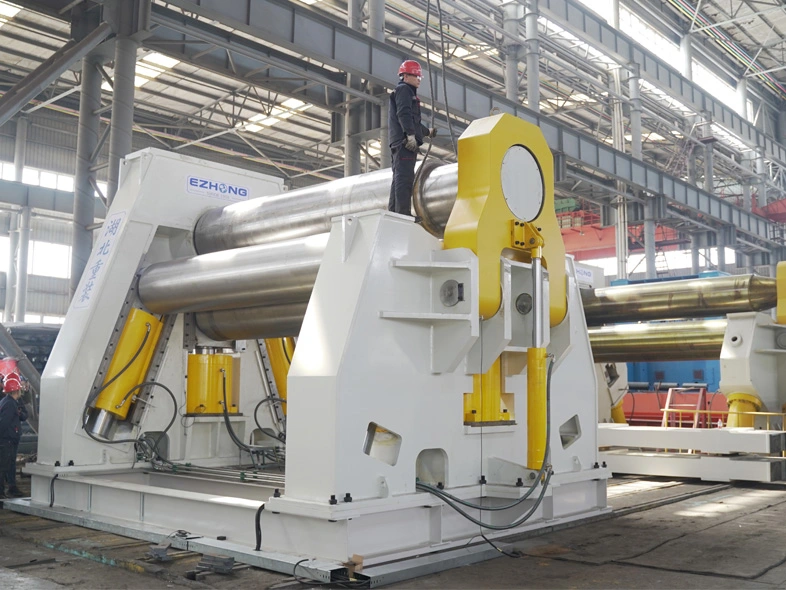
The plate is fed straight in and immediately pinched between the top and bottom rolls. The two side rolls then move upward in a controlled sequence, bending both edges and forming the full cylinder in a single continuous pass. Because the plate remains clamped throughout the entire process, there is no need to remove, flip, or re-insert the material.
This “enclosed action” eliminates almost all flat spots and delivers near-perfect cylindricality from the first part. CNC models can store recipes for hundreds of different diameters and thicknesses, allowing even less-experienced operators to achieve repeatable results.
Single-pass pre-bending — Both ends are formed without ever releasing the plate.
Superior precision and repeatability — Ideal for pressure vessels, nuclear components, and aerospace parts where tolerances are measured in fractions of a millimeter.
Higher productivity — Cycle times can be 50–70% faster than 3-roll equivalents.
Easier operation and greater safety — Minimal manual handling; many models feature automatic part ejection.
Excellent for cones and complex shapes — The independent side rolls allow asymmetric bending and variable radii in one setup.
CNC and Industry 4.0 ready — Full integration with factory automation systems.
Higher initial investment is the primary barrier—often 40–80% more than a 3-roll machine of similar capacity. They also require more floor space and a more robust electrical/hydraulic infrastructure. For very low-volume or extremely thick-plate work where flat ends are acceptable, the added features may be overkill.
Pressure-vessel manufacturing, wind-tower and offshore platform fabrication, shipbuilding, aerospace components, high-volume tank production, and any job demanding zero flat spots or complex conical transitions.
| Parameter | 3-Roll Plate Rolling Machine | 4-Roll Plate Rolling Machine |
| Roll Configuration | 2 fixed bottom + 1 adjustable top | 1 top + 1 bottom (pinch) + 2 independent side rolls |
| Pre-Bending | Requires two separate insertions and manual reversal | Single-pass, both ends in one setup |
| Flat Ends | Common (1.5–2.5× thickness) unless expertly pre-bent | Virtually eliminated |
| Cycle Time | Slower due to multiple steps | 50–70% faster |
| Operator Skill Required | High (experience critical) | Moderate (CNC makes it accessible) |
| Precision & Repeatability | Good but operator-dependent | Excellent, recipe-driven |
| Cone & Complex Shapes | Possible but multiple setups | Superior, single-setup capability |
| Initial Cost | Lower | Higher |
| Floor Space | More compact | Larger footprint |
| Best For | Job shops, low-medium volume, budget-conscious | High-volume, tight-tolerance, automated production |
The 3-roll machine forces a multi-step workflow; the 4-roll delivers an integrated, continuous process. This single difference cascades into every other performance metric.
4-roll machines produce cylinders that are measurably rounder and require far less post-rolling grinding or welding correction. In pressure-vessel code work (ASME, PED, etc.), this can mean the difference between passing inspection on the first try or scrapping expensive material.
Modern 4-roll machines can run with minimal supervision once the program is loaded. 3-roll machines still rely heavily on the operator’s “feel” for roll pressures and positions—knowledge that is becoming harder to find as veteran roll-formers retire.
For a shop rolling 20–50 identical vessels per month, the time savings from a 4-roll machine can pay back the extra investment in under 18 months through labor and energy reductions alone.
While a 3-roll machine wins on day-one price, the 4-roll often delivers superior ROI through reduced scrap, faster throughput, lower labor costs, and the ability to quote tighter-tolerance work that commands premium pricing.
Learn more about steel plate rolling: Steel Plate Rolling: The Complete Guide to Processes, Machines, and Heavy-Duty Applications
Project complexity and tolerance requirements — Tight tolerances or zero flat ends? Go 4-roll.
Production volume — High or repetitive? 4-roll pays for itself quickly.
Material type and thickness — Very thick plate (100 mm+) may still favor certain 3-roll variable-geometry models.
Budget and financing — Calculate total cost of ownership, not just purchase price.
Operator skill level — Short on experienced roll-formers? Modern 4-roll CNC levels the playing field.
Shop space and infrastructure — Measure twice; 4-roll machines need more room and power.
Future growth — Will you be bidding on wind, nuclear, or defense work in five years? Plan for 4-roll capability now.
In wind-tower production, 4-roll machines dominate because repeatability across hundreds of identical cans is non-negotiable. Shipyards use 4-roll units for curved hull sections where every millimeter counts for hydrodynamics and weight. Meanwhile, a medium-size tank fabricator in the Midwest still runs three 3-roll machines profitably for custom silos and ductwork where speed is secondary to flexibility.
One recent example: a pressure-vessel shop replaced two aging 3-roll machines with a single CNC 4-roll unit and increased daily output by 65% while reducing rework from 12% to under 2%.
There is no universal “best” plate rolling machine—only the best one for your specific mix of work, workforce, and growth plans. If you run a flexible job shop handling diverse, lower-volume projects, a well-chosen 3-roll machine will serve you reliably for years. If you're scaling production, chasing tighter tolerances, or preparing for automated workflows, the 4-roll platform is almost certainly the smarter long-term investment.
Still weighing your options? The decision ultimately comes down to a careful audit of your current and future project pipeline. Many manufacturers offer free application reviews, sample rolling trials, and detailed ROI calculations. Take advantage of them—your next plate rolling machine will likely be the most expensive single piece of equipment you buy this decade, but it can also become the most profitable.
Ready to discuss your requirements? Reach out to an experienced plate-roll specialist. The right choice today will pay dividends in speed, quality, and competitiveness for the next 20 years.
Yes, unless the operator is highly skilled at pre-bending. Even then, some residual flat remains that usually requires trimming.
Absolutely—and far more efficiently than a 3-roll. The independent side rolls allow precise tilting and asymmetric pressure.
Not if your budget is tight, volumes are low, or you primarily roll very large diameters where flat ends are acceptable after welding.
Expect 40–80% higher capital cost, but payback periods of 12–24 months are common in medium-to-high volume shops.
For 3-roll, CNC is helpful but not essential. For 4-roll, CNC unlocks the machine's full productivity and repeatability potential.
4-roll machines, because the plate stays clamped and manual handling is minimized.