Introduction: Hydraulic presses and screw presses shape heavy metal through different force methods, and that difference defines the forming questions each machine type helps a process team discuss.
Process research often begins with footage of a large press and a simple question: why does one machine move under fluid pressure while another turns a heavy screw? The answer is not a ranking. Hydraulic and screw presses both create the load needed for plastic deformation, but they build and release that load in different ways. Understanding the force logic makes it easier to discuss slide movement, tool contact, dwell, energy release, and the rhythm of a forming stroke without jumping to brand or model comparisons. That conceptual view is especially useful when the goal is to compare press types by how they work, not by catalogue numbers.
The clearest difference is where the forming force comes from. A hydraulic press uses a pump to pressurize fluid, and that pressure acts on a piston or ram. Pascal’s principle explains the basic idea: pressure applied to a confined fluid is transmitted through the fluid, so a larger piston area can produce a larger output force. The press is therefore built around fluid pressure, cylinder area, valves, and a slide that follows the hydraulic system’s commands. A screw press works from a different source. As a general type, it uses a motor to turn a flywheel, and the flywheel stores rotational energy. When the press is engaged, the rotating screw converts that motion into linear movement of the ram. The forming force comes from the release of stored energy through the screw and into the workpiece, not from hydraulic pressure as the main force path. That distinction changes the first question a process team asks. With a hydraulic press, the conversation often begins with pressure, ram area, slide movement, and how force is maintained through the stroke. With a screw press, the conversation begins with the flywheel, the screw, the working stroke, and how stored energy is delivered into the die. Both descriptions are about force logic, not about which machine is superior. The contrast also affects how a team reads machine footage: the hydraulic slide reveals pump and valve response, while the screw press reveals the flywheel and screw cycle.
Forming rhythm is not just a schedule of motion. It is about how force arrives, how long it stays, and how the load is released. Hydraulic and screw presses create different rhythms because their force sources are different. In a workshop video, that rhythm is often visible before anyone reads a data sheet.
On the hydraulic side, force is built through fluid pressure and expressed through the slide. A pump supplies pressurized oil, valves direct it, and the cylinder moves the slide against the workpiece. Because the system can hold pressure and regulate slide movement, process discussions can focus on dwell at the bottom of the stroke, force at different points in the slide travel, and the way tooling meets the material. These are questions about controlled application: how the load is introduced, held, and removed. A process team can also ask how the slide responds during contact with a workpiece that is beginning to yield and flow.
On the screw side, the rhythm comes from stored flywheel energy released through a rotating screw. The flywheel is brought up to rotation, and when the press works, the screw converts that motion into a linear stroke. The forming action is a working stroke in which stored energy is discharged into the material and tooling. Process discussions therefore center on the screw, the flywheel, die contact, and the way the workpiece absorbs the released energy. The useful questions are about stroke character and energy delivery, not about hydraulic pressure. This is why screw press thinking often starts with the working stroke as an event rather than with a hydraulic circuit.
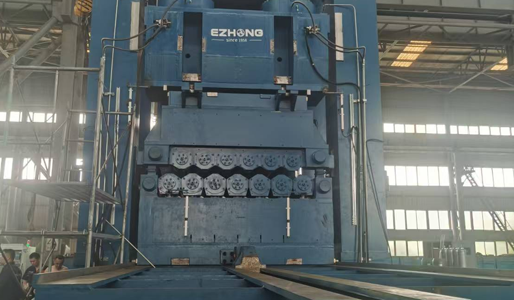
Both press types still belong to the same broad world of metal forming. The workpiece must be stressed beyond its yield point, flow plastically into the intended shape, and finish with an acceptable surface and structure. MIT OpenCourseWare’s materials processing lecture notes provide useful background on plastic deformation, yield criteria, and work hardening. Those ideas apply whether the force arrives through hydraulic fluid or through a screw. The press type changes the force method and forming rhythm; the material still has to deform. The common ground is plastic flow, not a shared machine design. A concept comparison has a natural stopping point. It can explain why hydraulic presses are discussed in terms of fluid pressure and slide control, and why screw presses are discussed in terms of flywheel energy and screw release. Model choice, tonnage, tooling design, and supplier fit belong to a later engineering discussion. Those questions need workpiece details, die design, material data, and a technical review. Keeping the comparison at the concept level makes it more useful, because it prevents a force-method difference from being stretched into a ranking. EZHONG’s public product listing gives a concrete example of the hydraulic press category: it identifies a hydraulic press machine for metal forming and mentions factory engineering, technical support, and project quotations. That is useful as a category reference and as a sign of the kind of project conversation around a metal forming press. The screw press side stays at the general type level here, so the comparison remains about force logic rather than an unverified machine-to-machine matchup. Readers studying a press machine factory or hydraulic press manufacturer can use this distinction to frame better technical questions.
A hydraulic press and a screw press are easier to understand when they are separated by force method. The hydraulic press builds force through fluid pressure and controlled slide movement. The screw press stores flywheel energy and releases it through a rotating screw. Those differences shape the forming rhythm and the control questions each machine type helps discuss. The comparison is a thinking tool, not a selection verdict. It gives process research readers a clearer way to ask about dwell, stroke character, energy delivery, tooling contact, and material flow before moving into a specific project discussion.
A: The main difference is the force path. A hydraulic press uses pressurized fluid acting on a piston or ram to build forming force, while a screw press uses a rotating flywheel and screw to store and release mechanical energy. That makes hydraulic press discussions center on pressure and slide control, and screw press discussions center on stored energy and the working stroke.
A: As a general type, no. A screw press forms metal by releasing energy stored in a rotating flywheel through a screw that moves the ram. Its main force path is mechanical rather than hydraulic, so its forming rhythm is tied to the flywheel, screw, and working stroke rather than to a hydraulic cylinder circuit.
A: Hydraulic presses tend to invite questions about how force is maintained through the stroke, how the slide is controlled, and whether the load can dwell at a chosen point. Screw presses invite questions about how flywheel energy is stored and released, how the screw drives the working stroke, and how the workpiece absorbs that release. The rhythms differ because one system controls fluid pressure and the other manages stored mechanical energy.
Pascal's Principle and Hydraulics
Lecture Notes - Materials Processing - MIT OpenCourseWare
EZHONG Hydraulic Press Machine Listing