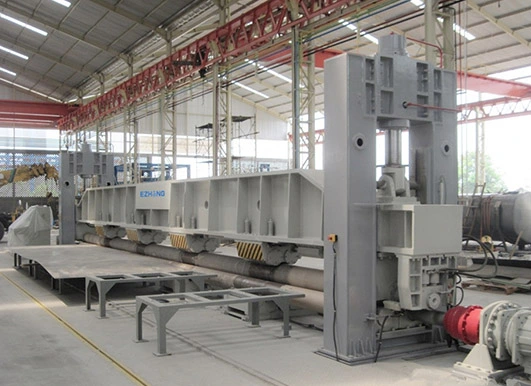
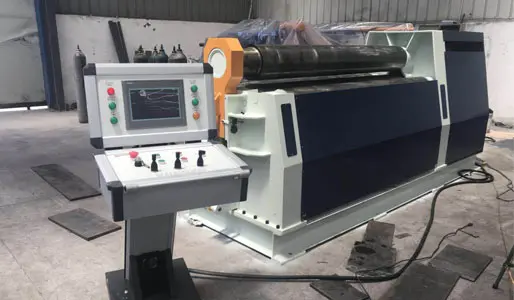
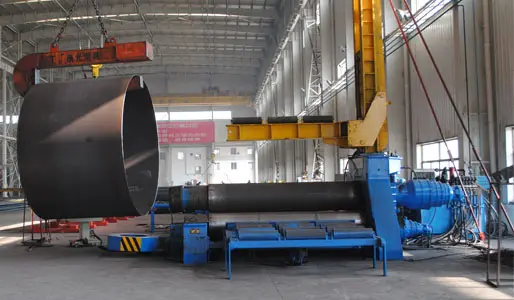
A buyer comparing hydraulic presses for metal forming usually starts with a list of numbers: force, bed size, stroke, speed. Those numbers matter, but they arrive late. Long before a purchase order exists, someone has to work out what the workpiece actually needs — which material, which forming method, which tooling, which space on the factory floor. On heavy equipment that work is done jointly by the buyer's process engineers and the manufacturer's technical team. That role is worth mapping in detail: what the support work involves, how it differs from a sales conversation, and why careful, conservative answers are a sign of a functioning engineering relationship rather than a weak one.
In practice, the first engineering conversation rarely starts with a machine. It starts with a part. A manufacturer's technical team typically asks what the workpiece is made of, how thick it is, how large the blank is, and what the forming step has to achieve — a bend, a drawn cup, a pressed assembly. Each answer narrows the field. High-strength steel behaves differently from mild steel under the same force, and a long deep draw loads a press very differently from a single bending stroke. From those details, engineers can begin to describe the kind of hydraulic press the process implies, instead of the kind a catalogue happens to list. Site conditions join the same conversation early. Floor space, foundation load capacity, available power, crane capacity for tooling changes, and how the press connects to upstream cutting and downstream handling all shape what can be installed and how it will run day to day. A machine that suits the workpiece but not the building is not a solution. Where a manufacturer publicly describes factory engineering and technical support, as EZHONG does for its hydraulic press line alongside project quotations, the practical meaning is that this early mapping work is expected to happen before commercial terms are settled. The support role also involves knowing what cannot be answered yet. A press machine factory can discuss general capabilities, working methods, and documentation practice, but the exact configuration only becomes real once the workpiece details, tooling concept, and site constraints are on the table. Experienced support engineers say so plainly and name the missing inputs. That habit is what separates a technical exchange from a brochure recital, and it is why early conversations often feel slower than buyers expect — they are doing the work that later prevents expensive assumptions.
Sales and engineering answer different questions, and the difference is easy to spot once you know what to listen for. A sales discussion covers commercial scope: what can be offered, what a quotation covers, and which options exist. An engineering discussion covers whether a specific forming job will work on the machine being described. Both are necessary, and on heavy equipment they usually run in parallel rather than one after the other. Confusing them is a common source of disappointment, because words like capacity, stroke, and bed size sound precise in a quotation and turn out to depend on the workpiece once an engineer looks closely.
The clearest sign that a conversation has moved into engineering is that the questions stop having short answers. "What tonnage do you need?" is a sales-style question with an implied number attached. "What material grade, what thickness range, and is this a single stroke or a long draw?" is an engineering question, and the honest answer is that tonnage follows from those details rather than preceding them. Questions about existing tooling, available shut height, off-centre loading, required cycle time, and acceptable variation all belong to this stage. They are not delays. They are how a support team confirms that the press, the die, and the part fit together before anyone commits to a configuration.
Drawings, process sheets, material specifications, and general arrangement drawings do more than record decisions — they stop two teams from using the same word for different things. Bed size to a tooling designer and bed size in a quotation can describe different clear areas. Published standards give both sides a neutral reference point: ASME's codes and standards cover a wide range of pressure and structural work, and the DOE Technical Standards Program illustrates how formal documentation conventions keep heavy equipment requirements traceable. Referencing a standard is not a compliance claim. It is a way of pointing at a shared definition instead of arguing about one, which makes a technical clarification survive after the people involved move on.
Engineering ethics guidance such as the NSPE Code of Ethics asks engineers to be honest and objective and to avoid exaggeration in professional statements. On heavy equipment that principle carries a practical cost. If a support engineer confirms a capability that has not actually been checked — a force figure that only holds at the low end of a material range, a tooling interface that has not been drawn yet — the error surfaces months later on a factory floor, not in a meeting room. Conservative disclosure is the habit that prevents this, and it is ordinary engineering practice rather than hedging. In day-to-day terms, conservative disclosure looks like stating what is confirmed about the machine, naming the details that depend on the specific workpiece, and saying which items will be settled during technical review: exact configuration, tooling integration, the documentation set, and schedule. A support team that answers "that depends on your material grade and draw depth, and here is why" is usually more useful than one that answers every question instantly. Buyers reading manufacturer material should read that pattern as information about how the engineering side actually works, and confirm price, lead time, certification status, and service arrangements directly for their own project.
Engineering support from a manufacturer is best understood as the part of the relationship that turns a forming problem into machine requirements, then keeps the shared vocabulary intact through drawings, documentation, and standards references. It sits upstream of the sales conversation and continues alongside it, and its output is specific and conservative rather than broad and confident. For anyone learning how heavy equipment manufacturers actually work, that role is the clearest difference between a supplier that ships a machine and one that helps a factory make a part. The hydraulic press listing from EZHONG shows how these service topics appear publicly; the project-level details behind them still come from direct technical discussion.
A: It runs the engineering conversation around the machine. That includes reviewing workpiece material, thickness, and forming method, discussing tooling and site conditions, preparing drawings and technical documentation, referencing applicable standards, and issuing a project quotation that reflects the confirmed scope. On public material, EZHONG lists factory engineering, technical support, and project quotations as visible service topics for its hydraulic press line, which describes the shape of that role rather than a guaranteed service level.
A: A sales discussion answers what can be offered and what a quotation covers. Engineering support answers whether a specific forming job will run properly on the machine being considered. That means questions about material grade, draw depth, existing tooling, shut height, off-centre loading, and cycle time, all of which change what configuration makes sense. Sales language tends to sound precise; engineering language explains which details still determine the answer.
A: Because force, tooling, stroke, and speed requirements all follow from them. The same press that handles a simple bend comfortably may be poorly suited to a long deep draw in high-strength steel, and material behaviour changes how much force is needed and how much the part springs back. Establishing material and forming method first keeps later specification talk grounded in an actual part rather than a generic number.
NSPE Code of Ethics for Engineers
DOE Technical Standards Program
List of ASME Codes & Standards - ASME
EZHONG Hydraulic Press Machine Listing